Roads are designed with a variety of markings that help drivers, cyclists, and pedestrians travel safely and efficiently. While most people notice the white and yellow lines painted on roads every day, very few fully understand their meanings and the rules associated with them. Road line markings are not merely decorative elements; they are essential traffic control devices that guide vehicle movement, prevent accidents, and maintain smooth traffic flow.
Understanding road line marking rules is a crucial part of responsible driving. Whether you are a new driver or an experienced motorist, knowing the meaning of different traffic lines can help you make safer decisions on the road and avoid traffic violations. Let’s explore the most common road markings and understand what they mean.
Why Are Road Line Markings Important?
Road markings serve as a visual language that communicates important information to road users. They help drivers stay in their lanes, indicate where overtaking is permitted or prohibited, identify pedestrian crossing areas, and provide directions at intersections.
Some of the major benefits of road line markings include:
- Improving road safety
- Reducing traffic congestion
- Preventing collisions
- Guiding drivers in poor visibility conditions
- Enhancing pedestrian safety
- Supporting effective traffic management
Ignoring road markings can result in accidents, fines, and dangerous driving situations.
-
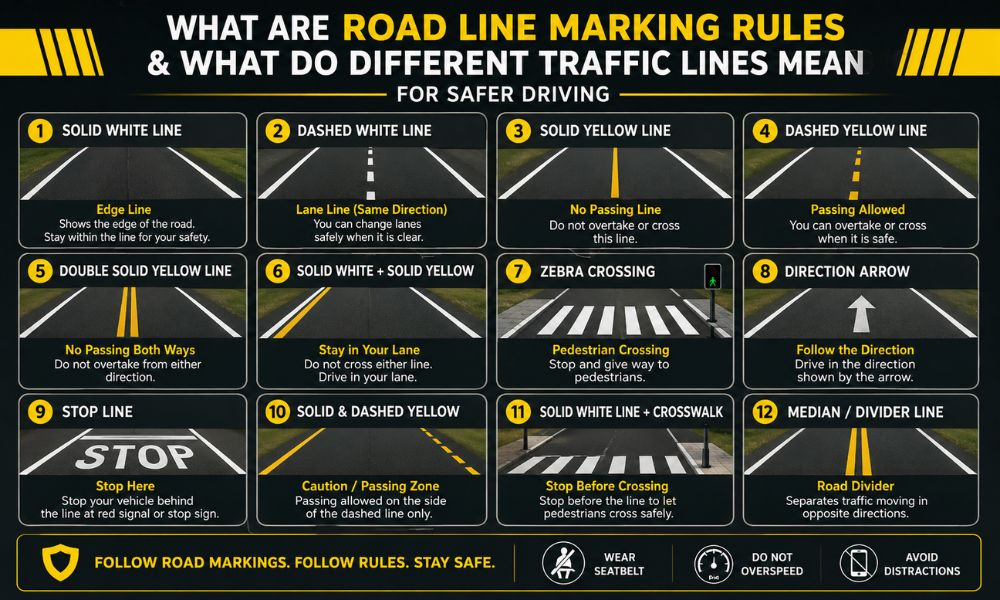
Solid White Line
A solid white line is one of the most commonly seen road markings. It indicates that drivers should remain within their lane and avoid changing lanes.
Meaning:
- Lane changing is discouraged or prohibited.
- Vehicles should stay within their designated lane.
- Often found near intersections, curves, and areas with high traffic density.
Safety Purpose:
The solid white line helps maintain lane discipline and reduces the risk of side collisions caused by sudden lane changes.
-
Broken White Line
A broken white line separates lane moving in the same direction and allows drivers to change lanes when it is safe to do so.
Meaning:
- Lane changes are permitted.
- Overtaking may be allowed depending on traffic conditions.
- Drivers must check mirrors and blind spots before changing lanes.
Safety Purpose:
These lines provide flexibility while maintaining order and encouraging safe overtaking practices.
-
Solid Yellow Line
A solid yellow line usually separates traffic moving in opposite directions and indicates that overtaking is not permitted.
Meaning:
- Crossing the line is prohibited.
- Overtaking vehicles is not allowed.
- Commonly used on curves, hills, and roads with limited visibility.
Safety Purpose:
This marking prevents head-on collisions by discouraging drivers from entering the opposing lane.
-
Broken Yellow Line
A broken yellow line generally allows overtaking under safe conditions.
Meaning:
- Drivers may cross the line to overtake.
- Extra caution should be exercised before crossing.
- Visibility and road conditions must be assessed carefully.
Safety Purpose:
This marking allows traffic to flow efficiently while maintaining safety standards.
-
Double Broken Yellow Lines
Double broken yellow lines may indicate special lane arrangements depending on regional traffic regulations.
Meaning:
- Drivers should follow local road rules.
- Crossing may be restricted in certain situations.
- Often used in areas requiring additional caution.
Safety Purpose:
They provide enhanced guidance in complex traffic environments.
-
Directional Arrow Markings
Directional arrows painted on roads indicate the direction vehicles should follow.
Meaning:
- Show whether vehicles must go straight, turn left, turn right, or make a U-turn.
- Found at intersections and lane-divided roads.
Safety Purpose:
These arrows reduce confusion and help drivers position their vehicles correctly before reaching intersections.
-
Zebra Crossing
A zebra crossing consists of alternating white stripes painted across the road for pedestrian use.
Meaning:
- Designated crossing area for pedestrians.
- Drivers must slow down and give way to pedestrians.
Safety Purpose:
Zebra crossings enhance pedestrian safety and help reduce accidents involving people crossing roads.
-
Straight-Ahead Arrow
This road marking specifically indicates that vehicles in that lane must continue straight.
Meaning:
- No turning allowed from the lane.
- Drivers must proceed forward.
Safety Purpose:
It ensures smooth traffic flow and prevents lane confusion at intersections.
-
Stop Line
A stop line is a thick white line painted across the lane near intersections, traffic signals, or stop signs.
Meaning:
- Vehicles must stop before crossing the line.
- Drivers should wait behind the line until it is safe or legal to proceed.
Safety Purpose:
The stop line protects pedestrians and ensures orderly movement through intersections.
-
Combination of Solid and Broken Lines
In some situations, roads feature a solid line alongside a broken line.
Meaning:
- The side with the broken line may cross or overtake when safe.
- The side with the solid line must not cross.
Safety Purpose:
This arrangement provides controlled overtaking opportunities while minimizing risks.
-
Parking Restriction Markings
Certain road markings indicate parking restrictions near intersections, pedestrian crossings, or public facilities.
Meaning:
- Parking may be prohibited in marked areas.
- Drivers should observe nearby signs for specific restrictions.
Safety Purpose:
These markings keep visibility clear and ensure smooth traffic movement.
-
Median Line
A median line separates opposing traffic lanes and marks the center of the road.
Meaning:
- Divides traffic moving in opposite directions.
- Helps drivers stay on the correct side of the roadway.
Safety Purpose:
Median markings significantly reduce the risk of head-on collisions and improve traffic organization.
Common Mistakes Drivers Make
Many accidents occur because drivers fail to understand or follow road markings. Common mistakes include:
- Changing lanes across solid lines.
- Ignoring stop lines at traffic signals.
- Overtaking where solid yellow lines are present.
- Blocking pedestrian crossings.
- Driving in the wrong lane near intersections.
Avoiding these mistakes can make roads safer for everyone.
Tips for Following Road Line Marking Rules
To become a safer driver, consider the following tips:
- Always observe road markings carefully.
- Reduce speed in areas with solid lines and restricted overtaking zones.
- Respect pedestrian crossings and stop lines.
- Follow directional arrows when approaching intersections.
- Avoid distracted driving.
- Stay updated with local traffic laws and regulations.
The Role of Road Markings in Modern Traffic Management
Modern transportation systems rely heavily on road markings to regulate traffic. Combined with traffic signs, signals, and intelligent transportation systems, these markings help millions of road users travel safely every day.
As cities continue to grow and traffic volumes increase, road markings play an even more important role in reducing congestion and improving overall road safety. They provide clear instructions without the need for constant enforcement and create a predictable driving environment for all road users.
Conclusion
Road line markings are much more than painted lines on the pavement. They are vital safety tools that communicate important information to drivers, cyclists, and pedestrians. Understanding the meanings of solid white lines, broken white lines, yellow lines, directional arrows, zebra crossings, stop lines, and median markings can significantly improve driving behavior and reduce the likelihood of accidents.
Every responsible driver should make an effort to learn and follow road line marking rules. By respecting these simple yet effective traffic guidelines, we can create safer roads, smoother traffic flow, and a more secure environment for everyone who uses the road.