Our body often communicates with us through small changes. Feeling tired all the time, noticing increased hair fall, experiencing bone discomfort, having difficulty concentrating, or seeing changes in the skin and nails may sometimes make us wonder whether our diet is missing an important nutrient.
Vitamins and minerals are essential for many processes, including energy metabolism, blood formation, nerve function, immunity, vision, and maintaining healthy bones. However, a particular symptom does not automatically mean that you have a specific vitamin deficiency. Many health conditions can produce similar signs, so persistent or severe symptoms should be evaluated by a healthcare professional.
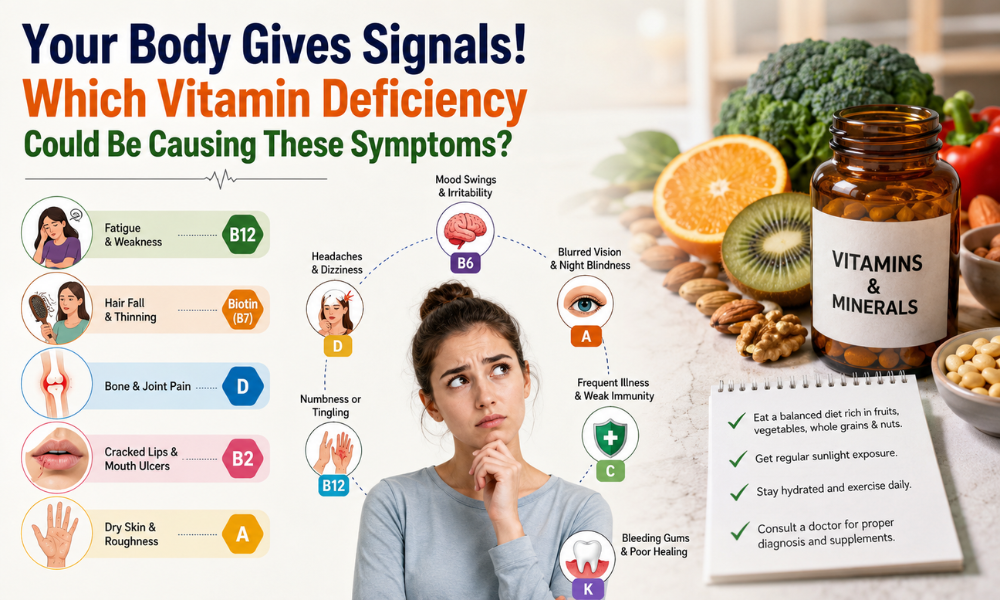
The image highlights several common symptoms and nutrients that may be associated with them. Here is a more detailed look at what these signals may mean.
- Feeling Tired Frequently – Vitamin B12 or Iron
Constant tiredness is one of the most common complaints people experience. While a busy lifestyle or inadequate sleep can certainly contribute, nutritional deficiencies can also play a role.
Vitamin B12 is important for healthy blood cells and the nervous system. Vitamin B12 deficiency can cause tiredness and weakness, particularly when it leads to megaloblastic anemia. Other possible symptoms include pale skin, heart palpitations, numbness or tingling, balance problems, memory problems, and a sore mouth or tongue.
Food sources: Milk, curd, eggs, fish, meat, and other animal foods provide vitamin B12. People who eat little or no animal foods may need to pay particular attention to their B12 intake.
Iron deficiency can also cause tiredness because iron is required to make hemoglobin, which carries oxygen through the body. If fatigue continues despite adequate sleep and food, medical testing can help identify the actual cause.
- Increased Hair Fall – Biotin, Iron, or Other Nutrients
Seeing more hair than usual on a comb or pillow can be concerning. Nutritional deficiencies may contribute to hair problems, but hair loss is not specific to one vitamin.
Biotin is involved in normal metabolism, but biotin deficiency is relatively uncommon. Hair loss can also be associated with inadequate iron or other nutritional factors, hormonal changes, stress, illness, and several scalp conditions.
Instead of automatically taking a hair supplement, it is better to identify the underlying reason. A balanced diet containing nuts, seeds, eggs, legumes, vegetables, fruits, and adequate protein can support normal hair health.
- Bone Discomfort or Muscle Weakness – Vitamin D
Vitamin D plays an important role in calcium absorption and bone health. Severe vitamin D deficiency can cause osteomalacia in adults, which can involve bone pain and muscle weakness.
Sunlight contributes to vitamin D production in the skin, while dietary sources include fortified foods and certain animal foods such as fatty fish and egg yolks.
However, simply spending more time in the sun is not a universal treatment. Sun exposure needs to be balanced with skin protection, and people with suspected deficiency may require a blood test and professional guidance.
- Difficulty Concentrating – B Vitamins and Other Factors
Problems with concentration, memory, or mental alertness can have many causes, including inadequate sleep, stress, dehydration, medication effects, and nutritional deficiencies.
Vitamin B12 deficiency can produce neurological symptoms, including numbness, tingling, confusion, poor memory, and balance difficulties. Importantly, neurological symptoms can occur even without obvious anemia.
Therefore, persistent cognitive changes should not simply be treated with a vitamin supplement. Finding the actual cause is more important.
- Slow Wound Healing or Frequent Bruising – Vitamin C and Other Nutrients
Vitamin C supports collagen formation and helps maintain healthy connective tissues. Severe vitamin C deficiency can lead to impaired wound healing, bleeding gums, and other problems.
Good dietary sources include amla, oranges, lemons, guava, tomatoes, capsicum, strawberries, and other fruits and vegetables.
Eating a variety of fresh produce is generally a better approach than depending on a single food or high-dose supplement.
- Poor Night Vision – Vitamin A
Vitamin A is especially important for normal vision. One recognized sign of vitamin A deficiency is difficulty seeing in low light, known as night blindness. Severe deficiency can progress to serious eye damage.
Vitamin A is available from foods such as eggs, dairy products, and certain fish, while plant foods such as carrots, pumpkin, and leafy vegetables provide carotenoids that the body can convert to vitamin A.
Because excessive amounts of preformed vitamin A can also be harmful, supplements should not be taken casually.
- Muscle Cramps or Weakness – Magnesium and Potassium
Occasional muscle cramps do not necessarily indicate a deficiency. Dehydration, exercise, medications, and several medical conditions can also cause cramps.
Magnesium deficiency can produce fatigue and weakness initially. As deficiency becomes more severe, symptoms may include muscle contractions, cramps, numbness, tingling, seizures, and abnormal heart rhythms.
Magnesium-rich foods include nuts, seeds, beans, whole grains, and leafy green vegetables.
Potassium is another important mineral for muscle and nerve function. However, abnormal potassium levels can sometimes be related to medical conditions or medications, so potassium supplements should not be taken without professional advice.
- Low Mood or Feeling Mentally Drained – Vitamin D, B12, and More
Mood changes can be influenced by many factors, including stress, sleep, lifestyle, mental health, medications, and underlying medical conditions.
Some nutritional deficiencies, including vitamin B12 deficiency, can be associated with neurological and psychological symptoms.
Rather than assuming that low mood is caused by a vitamin deficiency, consider the complete picture. If symptoms are persistent or affecting daily life, speaking with a healthcare professional is appropriate.
- Brittle or Splitting Nails – Nutrition and Overall Health
Weak, brittle, or splitting nails can sometimes occur alongside inadequate nutrition, but they can also result from frequent exposure to water or chemicals, nail products, trauma, or certain medical conditions.
Biotin is often promoted for nail and hair health, but supplementation is not automatically necessary for everyone. A varied diet with adequate protein, vegetables, fruits, whole grains, dairy or alternatives, nuts, and seeds is a sensible foundation.
- Bleeding or Swollen Gums – Vitamin C
Healthy gums depend on proper oral hygiene as well as adequate nutrition. Vitamin C deficiency can affect connective tissue and may contribute to bleeding gums.
At the same time, gum bleeding is commonly associated with plaque-related gum disease. Therefore, repeated bleeding should not simply be blamed on a vitamin deficiency. Regular dental care and evaluation are important.
Why You Should Not Diagnose a Deficiency From Symptoms Alone
One of the biggest mistakes people make is connecting one symptom to one vitamin immediately.
For example, tiredness could be related to B12 deficiency, iron deficiency, poor sleep, stress, thyroid problems, infection, or other causes. Similarly, hair loss can have multiple explanations, while muscle cramps can occur for reasons unrelated to magnesium.
A healthcare professional may recommend appropriate tests based on your symptoms, diet, medical history, medications, and other factors. Testing can help determine whether supplementation is actually needed.
Food First: Build a Nutrient-Rich Diet
Instead of focusing on one “superfood,” aim for variety throughout the week. A balanced diet can include:
- Milk, curd and other dairy foods for nutrients such as calcium and B12.
- Eggs for protein and several essential nutrients.
- Nuts and seeds for magnesium, healthy fats, and other nutrients.
- Leafy green vegetables for folate, vitamin C, vitamin K, and minerals.
- Amla, guava and citrus fruits for vitamin C.
- Carrots, pumpkin and other colourful vegetables for carotenoids.
- Legumes and whole grains for fibre, minerals, and B vitamins.
- Fish and other animal foods as sources of B12 and, depending on the food, vitamin D.
A varied eating pattern is generally more useful than concentrating heavily on one vitamin.
Should You Take Vitamin Supplements?
Not necessarily. Supplements can be useful when a deficiency has been confirmed or when a healthcare professional identifies a higher nutritional requirement. But taking large amounts without a reason can be unnecessary and, for some nutrients, potentially harmful.
Vitamin B12, for example, is essential for blood and nerve health, but taking it does not provide an extra energy boost if you already have enough B12.
Vitamin D supplements also need appropriate dosing because excessive vitamin D can cause health problems.
Final Thoughts
Your body can sometimes give you clues through changes such as persistent tiredness, hair fall, bone discomfort, concentration problems, muscle cramps, poor night vision, brittle nails, or gum problems. These signs can sometimes occur with vitamin or mineral deficiencies, but they are not a diagnosis by themselves.
The best approach is to pay attention to persistent changes, maintain a varied and nutritious diet, and seek professional advice when symptoms continue. If a deficiency is suspected, appropriate testing can help determine what your body actually needs.
Listen to your body—but confirm the cause before starting supplements.