
The sacred Amarnath Yatra is one of India’s most revered pilgrimages, drawing thousands of devotees every year to the holy Amarnath Cave nestled in the Himalayas of Jammu and Kashmir. The cave is famous for the naturally formed ice Shivling, which devotees worship as a divine symbol of Lord Shiva.
One of the most common questions among pilgrims planning the journey is whether to choose the Baltal route or the Pahalgam route. While both paths lead to the same holy destination, the experience offered by each route is very different. Your choice depends on factors such as fitness level, available time, travel preferences, and whether you seek adventure or a traditional pilgrimage experience.
Understanding the Two Routes
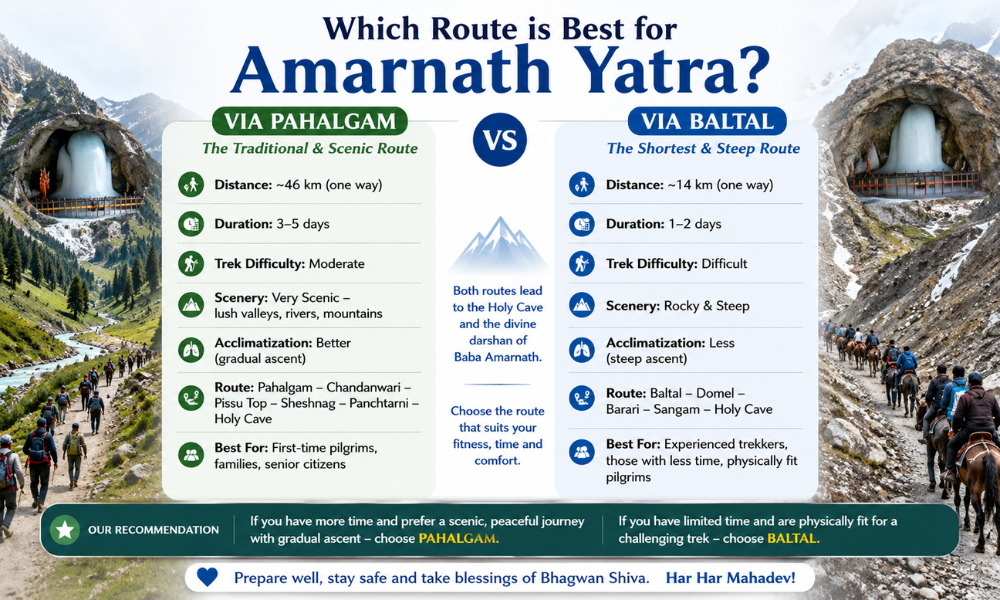
The Amarnath Cave can be reached through two officially approved routes. The first is the Baltal route, which is shorter and more challenging. The second is the Pahalgam route, which is longer but considered the traditional path followed by devotees for generations.
Both routes are equipped with security arrangements, medical facilities, food stalls, resting camps, and other essential services provided during the yatra season.
Amarnath Yatra via Baltal Route
The Baltal route is ideal for pilgrims who want to complete the yatra in the shortest possible time. Since the trekking distance is relatively short, many devotees complete the journey and return on the same day.
Major Points on the Baltal Route
- Baltal
- Starting point of the trek
- Located at an altitude of approximately 2,743 meters
- Offers camps, accommodation, and registration-related facilities
- Domail
- Around 2 kilometers from Baltal
- A resting point with basic facilities
- Barari Marg
- One of the steep sections of the trek
- Popular stop for refreshments and short breaks
- Sangam Top
- The point where Baltal and Pahalgam routes meet
- Offers magnificent mountain views
- Amarnath Cave
- Final destination
- Darshan of the sacred ice Shivling
Why Choose the Baltal Route?
The biggest advantage of the Baltal route is that it saves time. Pilgrims with limited vacation days often prefer this option. The shorter distance also makes it popular among those who are physically fit and capable of handling a steep climb.
The route offers a thrilling trekking experience through rugged Himalayan terrain. Adventure seekers often find the Baltal route more exciting because of its challenging nature.
Challenges of the Baltal Route
Although the trek is shorter, it is much steeper than the Pahalgam route. The climb can be physically demanding, especially for elderly pilgrims or those who are not accustomed to mountain trekking. Since the ascent is rapid, there is less time for the body to adjust to high-altitude conditions.
Amarnath Yatra via Pahalgam Route
The Pahalgam route is considered the traditional route of the Amarnath Yatra. This path is famous for its scenic beauty, lush valleys, snow-covered mountains, and spiritual atmosphere.
Unlike the Baltal route, the journey through Pahalgam is spread over several days, allowing pilgrims to experience the Himalayan landscape more closely.
Major Points on the Pahalgam Route
- Pahalgam
- Main base camp for pilgrims
- Surrounded by beautiful valleys and forests
- Offers hotels, guest houses, and camping facilities
- Chandanwari
- Starting point of the trek
- Known for its picturesque surroundings
- Pissu Top
- One of the initial climbing sections
- Offers breathtaking panoramic views
- Sheshnag
- Famous for the beautiful Sheshnag Lake
- Major overnight halt for pilgrims
- Mahagunas Top
- Highest point of the trek
- Spectacular views of Himalayan peaks
- Panchtarni
- Large camping area before the final stretch
- Medical and accommodation facilities available
- Amarnath Cave
- Sacred destination of the pilgrimage
- Darshan of Baba Barfani
Why Choose the Pahalgam Route?
The Pahalgam route provides a complete pilgrimage experience. Since the climb is gradual, pilgrims get more time to acclimatize to the altitude. This significantly reduces the chances of altitude-related discomfort.
The scenic beauty of the route is another major attraction. From alpine meadows and crystal-clear lakes to snow-capped mountains, every stage of the journey offers unforgettable views.
Many devotees believe that the spiritual essence of the Amarnath Yatra is best experienced through the traditional Pahalgam route.
Challenges of the Pahalgam Route
The primary challenge is the longer duration. Pilgrims need several days to complete the journey. This requires additional planning, accommodation arrangements, and physical endurance.
However, the gradual ascent makes the trek comparatively comfortable despite the longer distance.
Which Route Should You Choose?
The answer depends on your priorities.
Choose the Baltal route if:
- You have limited time.
- You are physically fit.
- You prefer a shorter trek.
- You want quicker access to the cave.
Choose the Pahalgam route if:
- You want the traditional Amarnath Yatra experience.
- You are traveling with family members.
- You prefer scenic landscapes.
- You want a gradual and comfortable trek.
- You have enough time for a multi-day pilgrimage.
Important Tips for Amarnath Yatra
- Complete your registration well in advance.
- Carry a valid medical certificate.
- Wear comfortable trekking shoes.
- Carry warm clothing, gloves, and rain protection.
- Stay hydrated throughout the journey.
- Avoid overexertion at high altitudes.
- Follow all instructions issued by authorities and security personnel.
- Maintain cleanliness and respect the fragile Himalayan environment.
Final Verdict
Both Baltal and Pahalgam routes offer unique experiences and lead to the same sacred destination. If your goal is a quick pilgrimage and you are physically fit, the Baltal route is an excellent choice. However, if you wish to enjoy the traditional journey, breathtaking Himalayan scenery, and a more gradual trek, the Pahalgam route is widely regarded as the better option.
For first-time pilgrims, families, and those seeking a complete spiritual experience, the Pahalgam route is often considered the most rewarding path to the holy Amarnath Cave. Regardless of the route you choose, the divine darshan of Baba Barfani makes every step of the journey truly memorable.