
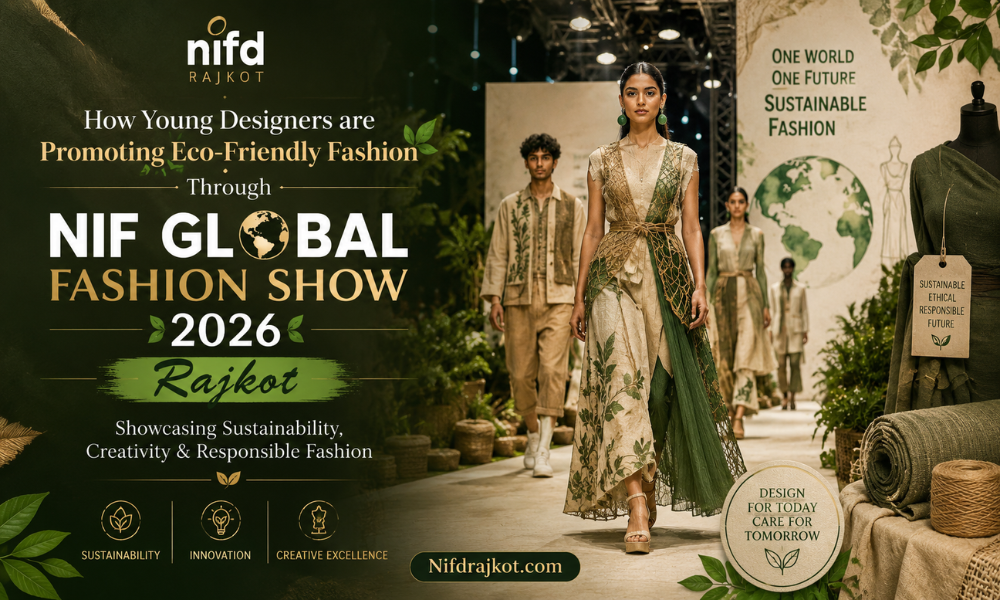
The fashion industry is undergoing a significant transformation. Around the world, consumers, designers, and brands are becoming increasingly conscious of the environmental impact of clothing production. Sustainable fabrics, ethical manufacturing practices, recycling, upcycling, and eco-friendly fashion are no longer niche concepts; they are becoming essential elements of modern fashion. In India, young designers are leading this change by creating innovative collections that blend style with sustainability.
One of the most inspiring examples of this movement was the NIF Global Sustainable Fashion Show 2026 held in Rajkot. The event provided a platform for emerging designers to showcase how fashion can be creative, responsible, and environmentally conscious at the same time. With a strong focus on sustainability, cultural heritage, and innovative design, the fashion show highlighted the future of the industry through the vision of young talent.
Event Details
- Event Name: NIF Global Sustainable Fashion Show 2026
- Organizer: NIF Global Rajkot
- Date: 7 June 2026
- Venue: Classic Banquet, Avadh Road, Rajkot
- Theme: Vasudhaiva Kutumbakam – Many Hands, One World
- Focus Areas: Sustainable Fashion, Eco-Friendly Costumes, Cultural Heritage, Ethical Design, Innovation and Creativity
- Participants: Emerging Fashion Designers and Students from NIF Global
- Objective: Promoting responsible fashion practices through creative design and sustainable materials.
The Rising Importance of Eco-Friendly Fashion
Fashion is one of the largest industries in the world, but it also contributes significantly to environmental challenges such as textile waste, water consumption, and pollution. Fast fashion has accelerated production cycles, resulting in excessive waste and resource depletion.
Join a professional Fashion Designing Course in Rajkot to master garment design, pattern making, textile knowledge, and the latest fashion industry trends.
Young designers understand these challenges and are increasingly adopting sustainable approaches to fashion design. They are proving that fashion can remain stylish and trendsetting while reducing its environmental footprint.
The NIF Global Fashion Show 2026 served as a powerful reminder that the next generation of designers is committed to building a greener future for the industry.
How Young Designers are Driving Sustainable Fashion
- Using Eco-Friendly Fabrics
One of the most effective ways to create sustainable fashion is by selecting environmentally responsible materials.
Many young designers are working with:
- Organic cotton
- Khadi fabrics
- Handwoven textiles
- Recycled fabrics
- Natural fibers
- Sustainable blends
These materials require fewer resources and often support local artisan communities. By incorporating such fabrics into their collections, designers are reducing environmental impact while preserving traditional textile craftsmanship.
- Promoting Khadi and Indigenous Textiles
India’s rich textile heritage offers numerous sustainable alternatives to synthetic fabrics. Khadi, handloom cotton, and traditional weaving techniques are becoming increasingly popular among emerging designers.
At sustainable fashion showcases, designers often reinterpret traditional fabrics into contemporary silhouettes that appeal to modern consumers. This approach not only promotes eco-friendly fashion but also supports local artisans and rural economies.
The fusion of heritage and innovation has become a defining feature of many NIF Global showcases across India.
- Encouraging Upcycling and Recycling
Instead of creating garments entirely from new materials, many young designers are experimenting with upcycling techniques.
Upcycling involves transforming discarded textiles and unused materials into fashionable new products. Designers are converting old garments, fabric scraps, and surplus materials into unique runway pieces.
This practice helps:
- Reduce textile waste
- Minimize landfill contribution
- Encourage creative innovation
- Promote responsible consumption
The results are often one-of-a-kind fashion creations that demonstrate both artistic skill and environmental responsibility.
- Creating Awareness Through Fashion
Fashion shows are not only about showcasing clothing; they are powerful communication platforms. Choose a reputed Fashion Design Institute in Rajkot to learn fashion illustration, draping, stitching, apparel production, and the latest fashion trends.
The NIF Global Sustainable Fashion Show encouraged designers to use garments as storytelling tools. Collections reflected themes such as environmental conservation, cultural identity, ethical production, and community empowerment. The event emphasized that design represents culture, craftsmanship, identity, and responsibility.
By integrating meaningful messages into their collections, young designers educate audiences about the importance of sustainable living and conscious fashion choices.
- Supporting Ethical Fashion Practices
Modern consumers increasingly want to know how their clothing is produced.
Young designers are responding by promoting:
- Fair labor practices
- Responsible sourcing
- Artisan collaboration
- Transparent production methods
- Slow fashion principles
These practices help create a more ethical and sustainable fashion ecosystem while ensuring that workers and artisans receive fair opportunities.
The Role of Creativity in Sustainable Design
Sustainability does not limit creativity; in fact, it often enhances it.
Designers participating in NIF Global fashion platforms have demonstrated how innovative thinking can transform sustainable materials into stunning runway collections. Their designs combine artistic expression, cultural storytelling, and responsible fashion practices.
Creative experimentation includes:
- Innovative draping techniques
- Handmade embellishments
- Natural dye applications
- Textile manipulation
- Contemporary interpretations of traditional crafts
These elements allow designers to create visually appealing collections while maintaining eco-friendly values.
Building the Future of Fashion
Young designers are increasingly recognized as the future leaders of the fashion industry. Through educational platforms, runway showcases, and mentorship opportunities, they are gaining exposure to national and international fashion trends.
NIF Global has provided emerging designers opportunities to showcase their talent on major fashion platforms, including national and international events that emphasize creativity, cultural storytelling, and responsible design. Top Fashion Designer Colleges in Rajkot offer comprehensive fashion education, portfolio development, internships, and placement assistance for aspiring designers.
Such exposure encourages students to:
- Think beyond conventional fashion
- Develop sustainable design solutions
- Experiment with innovative materials
- Create socially responsible collections
- Build careers aligned with global sustainability goals
Why Sustainable Fashion Matters Today
The demand for eco-friendly fashion continues to grow because consumers are becoming more aware of environmental issues. Sustainable fashion offers several benefits:
- Reduced environmental impact
- Lower textile waste generation
- Support for artisan communities
- Preservation of traditional crafts
- Ethical manufacturing practices
- Greater product durability
Young designers understand that sustainability is not simply a trend but a long-term necessity for the future of the fashion industry.
Rajkot’s Growing Fashion and Creative Ecosystem
Events like the NIF Global Sustainable Fashion Show 2026 are helping establish Rajkot as an emerging hub for fashion education, creative expression, and sustainable design innovation.
The city is witnessing growing interest in:
- Fashion design education
- Sustainable textile development
- Fashion entrepreneurship
- Creative industries
- Cultural and artistic events
Such initiatives inspire local youth to explore careers in design while contributing positively to society and the environment. Build a successful future in the fashion industry by enrolling in a Fashion Designing Course in Rajkot designed for beginners and aspiring fashion professionals.
Conclusion
The NIF Global Fashion Show 2026 in Rajkot demonstrated how young designers are transforming the fashion industry through sustainability, innovation, and creativity. By embracing eco-friendly fabrics, promoting Khadi and traditional textiles, encouraging recycling and upcycling, and advocating ethical fashion practices, these emerging talents are helping shape a more responsible future for fashion.
Their collections prove that style and sustainability can coexist beautifully. As environmental awareness continues to grow, young designers will play an increasingly important role in driving positive change across the global fashion landscape. Events like NIF Global Fashion Show 2026 not only celebrate creativity but also inspire the next generation to create fashion that is meaningful, responsible, and environmentally conscious.