Electricity bills have become one of the biggest monthly expenses for many households in India. With increasing power consumption due to air conditioners, refrigerators, washing machines, water pumps, and other modern appliances, homeowners are looking for long-term ways to reduce their electricity costs. Installing a rooftop solar system has emerged as one of the most practical and cost-effective solutions.
However, many people make the mistake of selecting a solar system based only on price. The ideal solar capacity should actually depend on your monthly electricity bill and your home’s average power consumption. Choosing the correct system ensures better savings, maximum efficiency, and a faster return on investment.
This guide explains how to choose the right solar system according to your home electricity bill and what you can expect from different solar capacities.
Why Your Electricity Bill Matters
Your monthly electricity bill reflects how much electricity your home consumes. Instead of guessing which solar system to buy, checking your electricity bill provides a clear idea of your daily and monthly energy requirements.
A properly sized solar system can:
- Reduce electricity bills significantly
- Produce enough electricity for daily household use
- Prevent unnecessary investment in oversized systems
- Deliver better returns over the lifespan of the solar panels
- Increase your home’s value
The first step before installing solar panels is understanding your average monthly electricity usage, usually measured in units (kWh).
Understanding Solar System Capacity
Solar systems are measured in kilowatts (kW). A larger capacity generates more electricity during sunny hours.
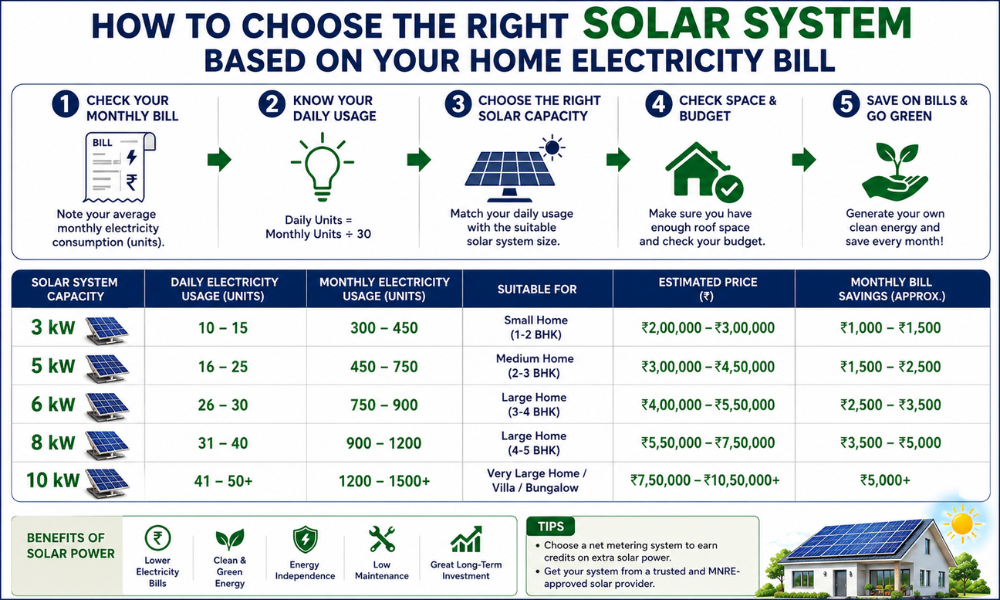
Under ideal weather conditions, each kilowatt of solar panels typically produces around 4 to 5 units of electricity per day. Actual production depends on sunlight availability, panel quality, roof direction, shading, and local climate.
Let’s look at the most common residential solar system sizes.
3 kW Solar System
A 3 kW system is suitable for small families with moderate electricity consumption.
Approximate Power Generation
- Daily Generation: Around 15 units
- Monthly Generation: Around 450 units
This capacity is generally sufficient for operating:
- One inverter air conditioner
- Two to three ceiling fans
- Television
- Refrigerator
- LED lighting
- Water pump
- Mobile and laptop charging
It is ideal for homes receiving a monthly electricity bill of approximately ₹2,000 to ₹3,000.
5 kW Solar System
A 5 kW solar system is one of the most popular choices for Indian households.
Approximate Power Generation
- Daily Generation: Around 25 units
- Monthly Generation: Around 750 units
Suitable for homes using:
- One to two air conditioners
- Three to four fans
- Refrigerator
- Television
- Washing machine
- Water pump
- LED lighting
- Kitchen appliances
It works well for homes with electricity bills between ₹4,000 and ₹6,000.
6 kW Solar System
A 6 kW solar setup is recommended for larger families with higher daily electricity usage.
Approximate Power Generation
- Daily Generation: Around 30 units
- Monthly Generation: Around 900 units
This system can comfortably support:
- Two air conditioners
- Multiple ceiling fans
- Refrigerator
- Television
- Washing machine
- Water pump
- Geyser
- LED lighting
- Small kitchen appliances
It is suitable for households paying around ₹6,000 to ₹9,000 every month in electricity charges.
8 kW Solar System
An 8 kW system is designed for homes with high electricity consumption.
Approximate Power Generation
- Daily Generation: Around 40 units
- Monthly Generation: Around 1,200 units
Suitable for running:
- Two to three air conditioners
- Multiple fans
- Refrigerator
- Television
- Washing machine
- Water pump
- Geyser
- Inverter
- Home office equipment
This capacity is ideal for homes receiving electricity bills of ₹8,000 to ₹12,000 per month.
10 kW Solar System
A 10 kW solar system is ideal for villas, bungalows, large independent houses, and homes with heavy electricity usage.
Approximate Power Generation
- Daily Generation: Around 50 units
- Monthly Generation: Around 1,500 units
It can easily power:
- Three to four air conditioners
- Multiple fans
- Refrigerator
- Television
- Washing machine
- Water pump
- Geyser
- Inverter
- Kitchen appliances
- Iron
- Home office equipment
This system is generally recommended for households with monthly electricity bills exceeding ₹12,000.
Factors to Consider Before Choosing a Solar System
While your electricity bill is the primary factor, several other aspects should also be considered before installation.
Roof Space
Solar panels require adequate shadow-free roof area. Larger systems need more installation space.
Sunlight Availability
Homes receiving direct sunlight for five to six hours daily generally produce better solar output.
Future Electricity Needs
If you are planning to purchase electric vehicles, install additional air conditioners, or expand your home, consider selecting a slightly larger system.
Panel Quality
Premium solar panels generally offer better efficiency, longer warranties, and improved performance over time.
Inverter Selection
A high-quality solar inverter ensures smooth conversion of solar energy into usable electricity while improving system reliability.
Government Subsidies
Residential rooftop solar installations may qualify for government subsidy schemes, helping reduce the overall installation cost. Always check the latest eligibility guidelines before making a purchase.
Benefits of Installing the Right Solar System
Choosing the correct solar capacity offers several long-term advantages.
Lower Electricity Bills
A properly sized system can significantly reduce monthly electricity expenses.
Environment-Friendly Energy
Solar power produces clean electricity without emitting harmful greenhouse gases.
Long Service Life
Most modern solar panels are designed to last 25 years or more with minimal maintenance.
Better Return on Investment
Lower electricity bills over many years help recover the installation cost while continuing to provide savings.
Increased Property Value
Homes equipped with rooftop solar systems are often viewed as more energy-efficient and attractive to potential buyers.
Simple Tips Before Buying
Before making your final decision:
- Review your electricity bills from the last 12 months.
- Choose a system based on average monthly consumption instead of seasonal usage.
- Ensure your roof has sufficient sunlight throughout the day.
- Compare panel efficiency, inverter quality, warranties, and installation services.
- Purchase from an experienced and trusted solar installation company.
- Verify whether your state offers rooftop solar subsidies or net metering benefits.
Conclusion
Choosing the right solar system isn’t just about buying the biggest setup—it’s about matching your home’s electricity consumption with the appropriate solar capacity. Whether your monthly bill is ₹2,000 or over ₹12,000, selecting the correct 3 kW, 5 kW, 6 kW, 8 kW, or 10 kW system can help you maximize savings while ensuring reliable power generation.
Before investing, analyze your electricity usage, evaluate your roof space, and plan for future energy needs. A well-designed solar system can provide clean, renewable electricity for decades, lower your dependence on conventional power, and deliver substantial long-term financial benefits. By choosing the right capacity today, you can enjoy lower electricity bills, greater energy independence, and a more sustainable future for your home.