
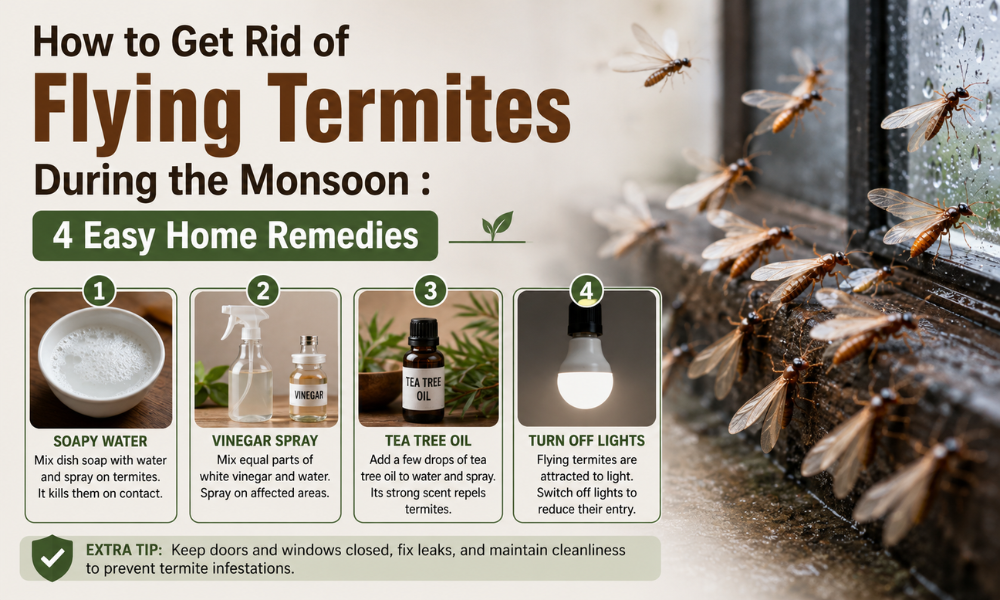
The monsoon season brings much-needed relief from the scorching summer heat, but it also creates the perfect environment for unwanted pests. One of the most common insects that appear during rainy evenings is the flying termite, often mistaken for flying ants. These winged insects are attracted to lights, damp conditions, and moist wooden structures. While seeing a few flying termites may not seem alarming, they can be a warning sign of a nearby termite colony that could eventually damage your home.
If you’ve noticed flying termites around your lights, windows, or doors during the rainy season, don’t panic. With a few simple home remedies and preventive measures, you can keep them away and protect your home from a potential infestation.
What Are Flying Termites?
Flying termites, also known as winged termites or swarmers, are reproductive termites that leave their colony during the monsoon to find a mate and establish new colonies. Their appearance is completely natural during warm, humid weather, especially after rainfall.
Unlike worker termites that stay hidden inside wood or underground, flying termites are visible because they emerge in large numbers, usually during the evening when lights are switched on.
Why Do Flying Termites Appear During the Monsoon?
Monsoon weather provides the ideal conditions for termite swarming because of:
- High humidity levels
- Damp wooden surfaces
- Moist soil
- Warm temperatures
- Increased rainfall
Flying termites are strongly attracted to artificial lights, which is why they often gather near tube lights, LED bulbs, balconies, and windows at night.
Are Flying Termites Dangerous?
Flying termites do not bite humans or spread diseases. However, they can become a serious problem if they establish a new colony inside your home.
A termite colony can slowly damage:
- Wooden furniture
- Doors and windows
- Wooden flooring
- Cabinets
- Roof beams
- Paper documents
- Cardboard boxes
Early prevention is always better than dealing with expensive termite damage later.
4 Easy Home Remedies to Get Rid of Flying Termites
- Switch Off Unnecessary Outdoor Lights
Flying termites are naturally attracted to bright lights.
What You Can Do
- Turn off outdoor lights whenever possible.
- Close curtains before switching on indoor lights.
- Replace bright white bulbs with warm yellow LED lights.
- Use insect-proof light covers near entrances.
This simple step significantly reduces the number of termites entering your home.
- Spray a Vinegar and Lemon Solution
A homemade vinegar spray is one of the easiest natural remedies.
Ingredients
- 1 cup white vinegar
- Juice of 2 lemons
- Spray bottle
How to Use
Mix the vinegar and lemon juice thoroughly and spray around:
- Windows
- Doors
- Wooden furniture
- Balcony entrances
- Wall corners
The acidic solution helps repel termites and discourages them from settling.
Repeat every few days during the rainy season.
- Keep Your Home Dry and Well Ventilated
Moisture is one of the biggest reasons termites thrive.
Tips
- Repair leaking pipes immediately.
- Dry wet floors after mopping.
- Avoid water accumulation near walls.
- Use exhaust fans in bathrooms and kitchens.
- Keep storage areas dry.
- Use a dehumidifier if necessary.
Reducing moisture makes your home much less attractive to termites.
- Seal Entry Points Around Your Home
Flying termites often enter through tiny cracks and gaps.
Inspect and seal:
- Window gaps
- Door frames
- Wall cracks
- Pipe openings
- Ventilation holes
Use silicone sealant or weather strips to block these entry points.
Installing fine mesh screens on windows also helps prevent insects from entering.
Additional Tips to Prevent Flying Termites
Besides the home remedies above, these preventive measures can make a big difference.
Remove Dead Wood
Old wood, tree stumps, and wooden debris around your house attract termites.
Dispose of:
- Firewood stored indoors
- Rotten wooden planks
- Old cardboard
- Dead tree branches
Store Wood Properly
If you keep firewood or timber, place it:
- Off the ground
- In a dry place
- Away from exterior walls
Keep the Garden Clean
Trim plants and bushes touching your home.
Dense vegetation traps moisture and creates hiding places for termites.
Clean After Rain
Standing water encourages insects.
After heavy rainfall:
- Remove stagnant water
- Dry balconies
- Clean gutters
- Ensure proper drainage
Natural Remedies That May Help
Some homeowners also use natural repellents such as:
- Neem oil spray
- Orange oil
- Clove oil
- Boric acid powder (keep away from children and pets)
- Diatomaceous earth
These may help reduce termite activity but are generally less effective against established colonies.
When Should You Call a Pest Control Expert?
Home remedies work best when flying termites are only seasonal visitors.
However, you should contact a professional if you notice:
- Mud tubes on walls
- Hollow-sounding wooden furniture
- Peeling paint
- Wings scattered around windows regularly
- Wooden doors becoming difficult to close
- Fine wood dust near furniture
These signs may indicate an active termite infestation that requires professional treatment.
Flying Termites vs Flying Ants
Many people confuse flying termites with flying ants.
Flying Termites
- Straight antennae
- Thick waist
- Four equal-sized wings
- Soft body
Flying Ants
- Bent antennae
- Narrow waist
- Front wings larger than back wings
- Harder body
Correct identification helps determine whether you need termite treatment or simple insect control.
Final Thoughts
Flying termites are a common sight during the monsoon, but they shouldn’t be ignored. While they don’t directly harm people, they can signal the beginning of a termite infestation that may cause costly damage to your home over time.
Fortunately, simple measures like reducing outdoor lighting, using a natural vinegar spray, keeping your home dry, and sealing entry points can greatly reduce the chances of termites entering your living space.
If you continue to see flying termites frequently or notice signs of wood damage, it’s best to seek professional pest control before the problem worsens. Taking preventive action during the rainy season is the easiest and most cost-effective way to protect your home and wooden furniture from termites.